Saturday, December 1, 2012

Santa Barbara One of 15 Best Housing Markets for Next 5 Years


Santa Barbara-Santa Maria-Goleta, California

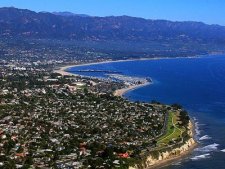
Wikimedia CommonsAnnualized expected growth from 2012 - 2017: 8.4 percent

The Santa Barbara-Santa Maria-Goleta metro area has a population of 426,878, a median family income of $69,000, and an unemployment rate of 8.1 percent.

Home prices are down 52 percent from their Q3 2006 peak, and the metro has a median home price of $290,000.

From Business Insider

Monday, July 9, 2012

Santa Barbara Real Estate: Rebounding Riviera

It’s probably no surprise that roller-coaster real estate markets like Phoenix and Miami are in roaring rebound mode this year, but Santa Barbara?
Who knew? Sometimes called the “American Riviera” for its red tile-roofed estates overlooking the Pacific, year-round great climate, active cultural life and its movie star residents, Santa Barbara took a significant though little publicized hit during the real estate bust, with median home list prices plunging from $1,667,500 in September 2007 to $649,000 this May.
But here’s the latest news: this May’s median list price in Santa Barbara – low as it may appear compared with the peak — was actually 30 percent higher than the same month last year, and nearly one-fifth higher than April of this year. Total home sales in May were double the year earlier. Pending contracts were up by nearly 80 percent.
It’s probably no surprise that roller-coaster real estate markets like Phoenix and Miami are in roaring rebound mode this year, but Santa Barbara?
Who knew? Sometimes called the “American Riviera” for its red tile-roofed estates overlooking the Pacific, year-round great climate, active cultural life and its movie star residents, Santa Barbara took a significant though little publicized hit during the real estate bust, with median home list prices plunging from $1,667,500 in September 2007 to $649,000 this May.
But here’s the latest news: this May’s median list price in Santa Barbara – low as it may appear compared with the peak — was actually 30 percent higher than the same month last year, and nearly one-fifth higher than April of this year. Total home sales in May were double the year earlier. Pending contracts were up by nearly 80 percent.
Another factor: Although its median list price puts it behind only San Francisco ($699,000 median) among California’s largest luxury markets, there is a recognition that Santa Barbara is a very special place, and that underlying real estate values very likely will rise faster here in an improving economy than elsewhere. Not only is Santa Barbara special locationally and in cultural terms, it’s also special – at least for California – in terms of employment. Metropolitan Santa Barbara’s unemployment rate is nearly 3 percentage points lower than the California statewide rate (8.2 percent in May compared with 10.8 for California as a whole.) Consumers with good local jobs can afford the $649,000 current median asking price for homes, and they are signing contracts to buy a piece of this jewel by the sea.
Bottom line: Don’t be surprised if Santa Barbara prices keep moving up faster than most other markets. And if you’ve ever wanted to live there or purchase property, this could be one of your last shots in a long while to pick up real estate coming out of a deep cyclical low.
By Forbes

Wednesday, June 27, 2012

Home Prices Moving Upwards

The Southland’s move-up market showed some signs of life as the region’s median home price improved for the second consecutive month in May, new data show.

The median home price rose 5.4% in May from the same month last year to hit $295,000, real estate research firm DataQuick reported Wednesday. That was a 1.7% improvement over the prior month.

Sales throughout the Southland also improved, up 20.6% from May 2011 and 15.1% from April to hit 22,192.

Helping boost the median was a narrower share of foreclosures selling as part of the market for previously owned homes. Foreclosed homes typically sell at a discount. Sales volume also improved for homes priced above $300,000, helping boost prices.

Tuesday, May 8, 2012

April’s Price Rise Makes a Three-Month Streak

Nationally, housing prices have bottomed and are on the rise. Asking prices on for-sale homes were 1.9% higher in April than one quarter ago. A 0.5% month-over-month rise in April, on top of month-over-month price increases in March and February, makes for three months in a row of rising asking prices, after adjusting for typical seasonal trends. In fact, prices have been stable or rising for the past eight months, except for a dip in December 2011. This marks a new milestone: asking prices were 0.2% higher in April than a year ago. Before April, prices were still falling year-over-year.
Not only are rising prices starting to look like a real trend: they’re also coming to a market near you — if they haven’t already. Asking prices increased year-over-year in 44 out of the 100 largest metropolitan areas, with Miami and Phoenix leading the charge.
Why these markets? One factor is job growth, which boosts housing demand. Miami, Phoenix, Warren-Troy-Farmington Hills (suburban Detroit) and Denver all saw strong employment gains in the past year. Another factor is the big price declines after the bubble, which attracted house hunters and investors searching for bargains to those markets. Most of the metros with the largest price increases in the last year had huge price declines during the bust, including Phoenix, Warren-Troy-Farmington Hills and the four Florida metros in the top ten. But among the metros with the largest price declines over the past year, only three–Sacramento, Las Vegas and Fresno–had huge overall price drops after the bubble burst.

Monday, May 7, 2012

By Les Christie

Buying a home may never get any cheaper than this. Several housing experts are predicting that this year will be the last chance for bargain hunters to cash in on the best deals of the weak housing market.

With home prices down 34% nationally since 2006 and mortgage rates at historic lows, homes have never been more affordable -- but it won't stay this way for much longer.

Stuart Hoffman, chief economist for PNC Financial Services, said he expects home prices to flatten out by the third quarter and start climbing by next year.

A number of factors will help bolster the housing market, he said, including a decline in the number of foreclosures and continued job growth. In addition, homebuyers will have better access to mortgages as they get their finances in order and improve their credit scores.

"This is a strong indicator that we will start seeing home price indexes, like the S&P/Case-Shiller, start to report home price increases this summer," he said.

Prospective homebuyers who've been sitting on the fence shouldn't worry if they aren't quite ready to make the leap. Analysts are predicting that the initial price gains will be modest, at least, in most markets

Friday, April 27, 2012

Home Buyers Find Bidding Wars are Back


Take a look at this article from the Wall Street Journal that describes how our current market has heated up with multiple offers on many listings.

Wednesday, April 18, 2012

Home Prices close to bottoming, to rise in 2013

The relentless decline in home prices is nearing an end and prices should rise for the first time in seven years in 2013, but a possible new wave of foreclosures could threaten the recovery, according a Reuters poll of economists.
The median forecast of 24 economists polled by Reuters was for the S&P/Case-Shiller 20-city home price index to end the year unchanged. That was the same finding back in January for this house price gauge, which covers 20 cities.
"We are expecting a gradual improvement, but if we get a big wave of new foreclosures coming to the market, price declines could be even greater," said Yelena Shulyatyeva, an economist at BNP Paribas in New York.
The survey forecast the S&P/Case-Shiller home price index rising 2.0 percent next year, up from 1.5 percent in the January survey.
The housing market's collapse pushed the economy into its longest and deepest recession since the 1930s. Historically, housing has led the economy out of recession, but it has been the weakest link in the recovery that started in mid-2009.
While residential construction accounts for a mere 2.3 percent of gross domestic product, home prices have an oversized reach in the economy, influencing a wide range of consumption decisions by households.
House prices have so far fallen about 32 percent from their peak at the end of 2005, and an estimated 11 million Americans now owe more on their homes than they are worth.
A resulting tide of foreclosures has held back the housing market's recovery.
The survey predicted about 1.5 million foreclosed properties will come on to the market this year. While there is no comparison for this figure, most analysts believe the foreclosure wave has either peaked or is close to topping out.

Wednesday, February 15, 2012

"Is anything selling?"

In this Bubble called Santa Barbara!
For the buyers wondering “if anything is selling”!
Currently 41% of our inventory under $1 million is in escrow, from Carpinteria to Goleta. In other words we only have 2.6 months of inventory left in that same price range.
If we look under the $600,000 price range it gets even crazier as 58% of those listings are under contract with buyers.
Clearly homes in Santa Barbara are selling and we could use some of that “Shadow Inventory” that the Media keeps talking about. Bring it on!

Monday, January 23, 2012

Sales Stir Hope for Housing Market

Sales of previously owned homes rose in December for the third straight month, bringing the supply of homes listed for sale to the lowest since 2006 and offering a glimmer of hope that the housing market could be starting to climb out of a profound downturn.

Existing-home sales increased 5% in December from a month earlier. Many economists had predicted that 2011 would be the worst year on record for existing home sales, but the year ended with 4.26 million sales, about 1.6% higher than the 4.19 million existing homes sold in 2010.

Home sales and home building are forecast to rise this year after sliding steeply the past five years in housing's worst downturn since the Great Depression. Investors are betting on the start of an upturn, bidding up home builder stocks and causing them to outperform the broader stock market.

Housings outlook is brightening with signs of a better economy. Last month, US employers added 200,000 jobs and the unemployment rate fell to 8.5%, lowest in nearly 3 years. While en economic shock could derail progress, there's now more evidence of improvement in the economy and housing will follow the economy, says David Crowe, Chief Economist at the National Association of Home Builders.

From USA Today and Wall Street Journal

Wednesday, January 11, 2012

To a Better 2012

CNBC’s Real Estate correspondent Diana Ollick had a piece on yesterday talking about the 7.3% (an increase was anticipated but not as large as this) increase in pending home sales nation wide. She noted that the largest increase was in the West (up 15%) were the market has been heating up of late (or something to that effect).

She also mentioned that she had spoken with several hedge funds that were buying up tracks of new, vacant house for rentals because of a strengthening economy/rental market with an eye to selling the houses in two years when the sales market was better. She noted when the BIG money comes in to the market that there is probably a light at the end of the tunnel (again, I don’t remember exactly…it was probably during my first cup of coffee). This was a surprise coming from her because, by her own admission, she has been singing the doom and gloom message all year.

Anyway, as I have said too often these last couple years the media has not helped the market or the Buyer physiology. Perhaps the news reporting, and the market conditions, is changing. I know there are a number of us who are busy during this typically slow week so we are going into 2012 with certainly more momentum than we had 12 months ago.

Happy New Year